The Potential Outcomes Model &
Structural Causal Model adopt a simplistic
"Imagined Worlds" view of causation that is not reflective of real-world causation.
In the real world, causation is known to be controlled by the structures and processes composing mechanisms. Real-world causal investigations are highly specific and beyond the realm of what statistical imagined systems can do.
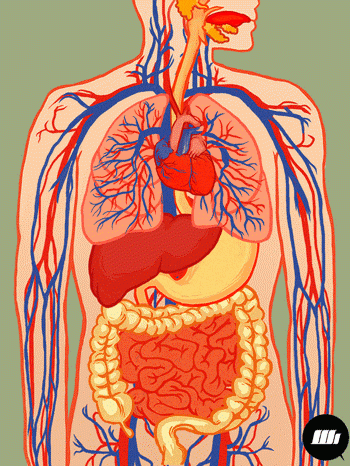
The human body systems, e.g., cardiovascular and respiratory) illustrate real-world mechanistic causal knowledge, built over a great many years. Mechanistic causal knowledge provides prediction, explanation, and control, as described in (https://plato.stanford.edu/ENTRiES/science-mechanisms/).
The Statistical Causal Inference Literature
is Highly Problematic (despite efforts to portray it as otherwise by some)
Interview with James Heckman (2022)
"The current literature on causality is filled with monologues of various participants hawking their wares, ignoring what others have to say.
I have read the literature in statistics [potential outcomes model] and computer science [structural causal model] closely. It has had a big influence on many fields ... often to their detriment. Much of the current “causal inference” literature ... conflates estimation methods with conceptual definitions of causality.
I have long practiced abductive inference [reasoning to the best explanation],
building and testing models using all sources of data (quantitative and qualitative).

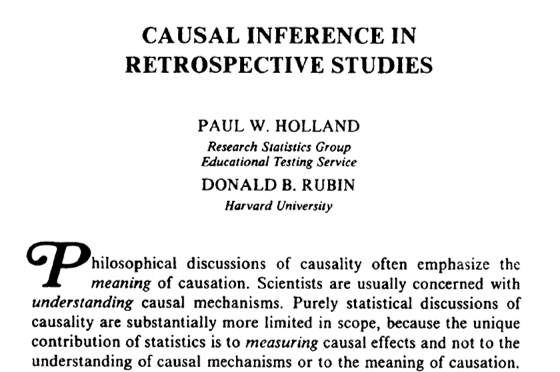
Figure 1.1. This single statement by Holland and Rubin in 1987, co-creators of the Potential Outcomes Model for counterfactual causal inference,
(1) acknowledged a major limitation inherent in statistical approaches to causal studies and
(2) pointed out some critical distinctions between the contributions of philosophers, scientists, and statisticians to the causal methods literature.
Scientists have largely failed to appreciate the significance of these points but have generally deferred to statisticians to develop the evidential system for supporting explicitly "causal" interpretations. This has been a huge error that must now be corrected.
Semantic Overreach - While Holland and Rubin recognized that their system is incomplete, their decision to refer to it as "Causal Inference" was never corrected to "Statistical Causal Inference" or "Counterfactual Causal Inference" which has helped to obscure the role of mechanistic knowledge and "Mechanistic Causal Inference".
The Missing Ingredient: Mechanistic Knowledge
What is the relationship between mechanisms and causation? Put briefly, it is just that causes and effects must be connected by mechanisms.
It seems some don’t like this viewpoint because the definition of mechanisms is not simple and general. Nonetheless, it corresponds to causation in the real world.
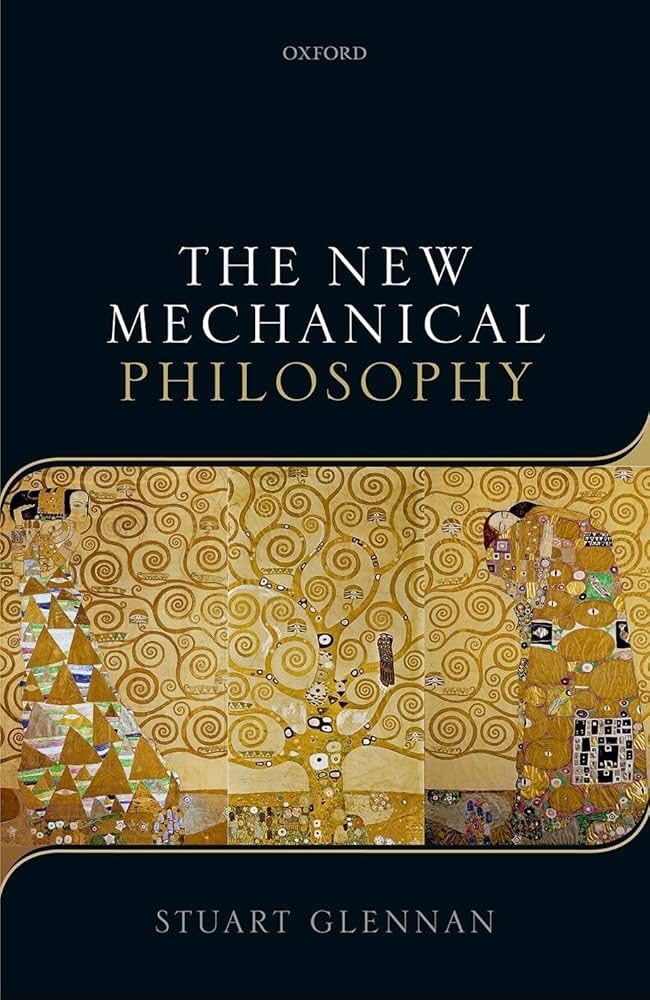
Causal Mechanism—Typically some collection of spatiotemporally contiguous structures and processes where changes can be
propagated from one entity to another. (Grace et al. 2025. Causal interpretations can be based on mechanistic knowledge.)
Call for a Multi-Evidence Paradigm for Causal Determinations
National Academies of Science, Engineering, and Medicine Consensus Report on Causal Methods (2022). [lead scientist, Dr. Ted Russell]
“Common approaches [to causal inference] include counterfactual causal inference, manipulative causal inference, and mechanistic causal inference.”
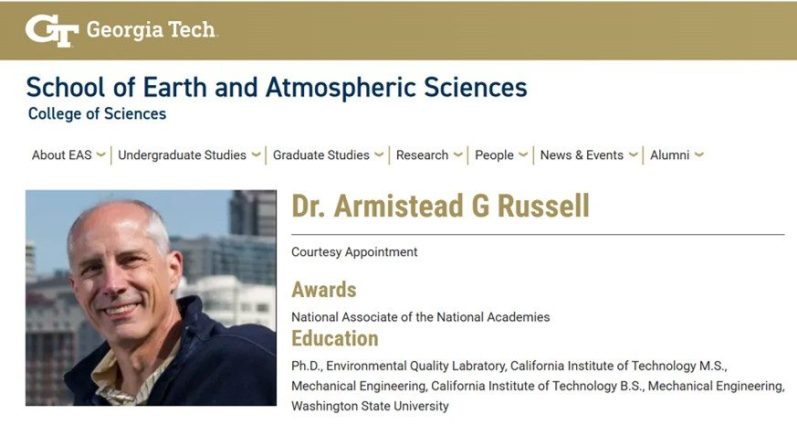
The National Academies Report provides an assessment of causal methods crafted by a team that includes scientists, engineers, and medical researchers, not just statisticians (who were well represented on the committee.
Mechanistic scientists, like Ted Russell are experts in causation. They, more than most, understand that causal manifestations reflect the details of mechanistic structures and processes, how they interconnect, and their physical, chemical, and biological details.