Understanding the Literature - The Structural Causal Model
Causal graphs facilitate testing of model-data consistency, but not the testing of counterfactual causal assumptions.
Figure 7.1. Many ecologists (like myself) were first exposed to Judea Pearl's system and many ecologists may not even be familiar with the Potential Outcomes model or the idea that the two systems have been hybridized. Pearl's representations implied that mechanistic knowledge can be used to make confident assumptions. Typically, his presentations assumed the true model was known and showed how, given that information, conditional independence tests could allow for the evaluation of certain, but not all, assumptions to identify causal effects. An ultimate limitation of this approach is the treatment of causation as a statistical effect and failure to recognize that in real-world causation, the mechanistic details matter a great deal.
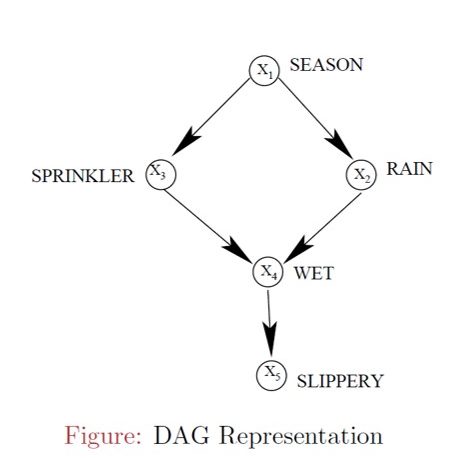
In the early days, Pearl interacted extensively with the Structural Equation Modeling crowd with the intention of providing a theoretical basis for identifying causal effects. A major focus was on conditional independence testing (e.g., using d-separation) to allow scientists to statistically test data-model consistency. This is not a test of model assumptions however.
Causal Graphs Subjected to Counterfactual Requirements
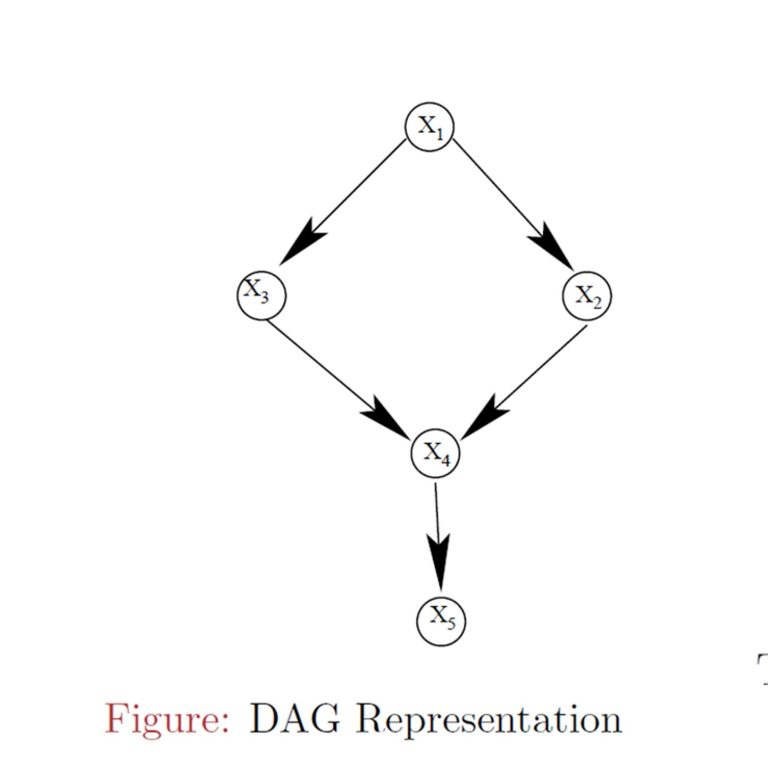
Figure 7. 2. Generalized to pure graphs and subjected to the perfection requirements for counterfactual causal effects (Fig. 6.3), the causal inference paradigm assumes there is no way to know that there are no omitted confounders and thus the potential for confounding cannot be tested. The result is that SCM is considered to be equivalent to PO in terms of requirements and the only practical way to move forward is to adjust data sets to eliminate generic sources of confounding using data purification strategies.
I again show Figure 6.2 below to illustrate what the fusion of PO and SCM has turned into.
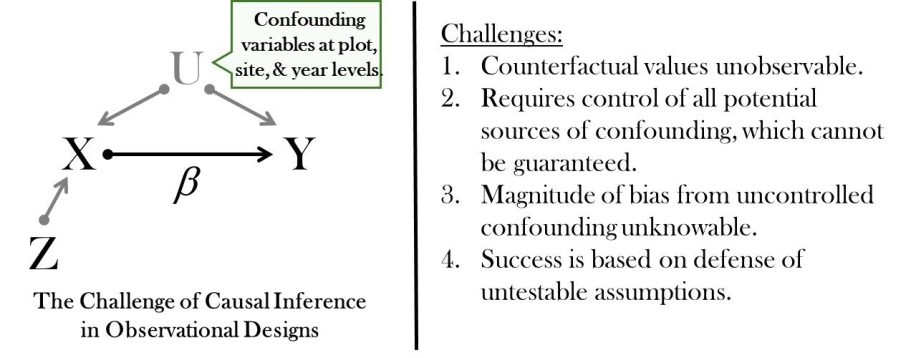
Figure 6.2. Representation of the challenge of statistical causal inference in observational data (modified from Dee et al. 2023). The theoretical requirement is to obtain a perfectly unbiased estimate of the effect of X on Y, β. Confounding variables U pose a pervasive threat to that goal that must be addressed. Z refers to an alternative method for bias control using instrumental variables.
Thus, the suggestion to "First Create a DAG" does not imply the same evidential process and requirements within the Causal Inference Paradigm of today as it seemed to in Pearl's original presentations. Rather, conditional independence is now seen as a causal assumption rather than a statistical test. DAGs are now used to interrogate untestable assumptions in a perfection-seeking process (see Figure 6.2).
Further, neither PO nor the SCM produce transportable causal knowledge because counterfactual causal effects are data summary products and not directly linked to mechanistic structures and processes, which are potentially transportable entities that exist independent of the data. For that ambition, I believe we need to rely on the Multi-Evidence Paradigm.
So, I would recommend, "First Conduct a Causal Knowledge Analysis."