Understanding the Existing Literature - A Broad View
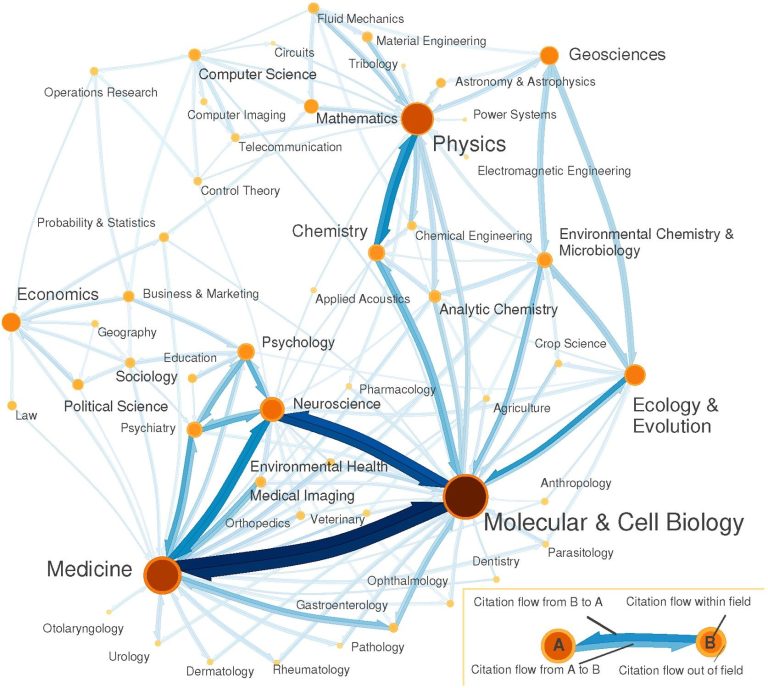
Figure 5.1. What is said about causal methods is potentially relevant to all fields of study. Some may deal with this by abstraction (e.g., "covering laws"), others by simplification (e.g., "difference making"), still others will seek realism by adopting a pluralistic approach (e.g., a "multi-evidence approach").
When trying to understand the literature, we may need to consider where the ideas come from as not all fields have the same pre-occupations.
The causal methods literature suffers from a gross insufficiency of terminological distinctions, which has rendered it distressingly opaque.
How Methods Literature Evolves Over Time
Figure 5.2. Younger scientists often don't realize how rapidly methods literature evolves over time. What is defensible today may not be tomorrow. Monistic viewpoints can provoke the promotional representation of alternative monistic viewpoints. Once it turns into competing camps, more confusion can be created. There is great opportunity for integrative pluralistic viewpoints to lead to rapid evolution in the literature.
The replacement of monistic paradigms by pluralistic ones is often inescapable. It can also be disruptive to those who overpromote a particular view.
A widespread problem in the causal methods literature is the failure to disclose and justify foundational assumptions. This is a particular problem when approaches are being promoted with great enthusiasm. Overly narrow focus is an especially strong contributor to methodological overstatement and even distortion of the literature. Examples that don't fit the current paradigm provide material proof that there is a need for an inclusive viewpoint. Once such exceptions are clearly seen, they cannot be unseen.
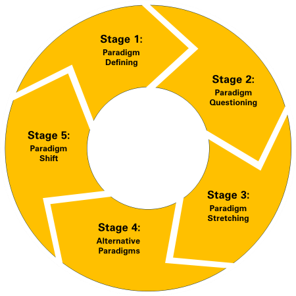
A description of the ongoing paradigm shift can be found in the paper linked here.
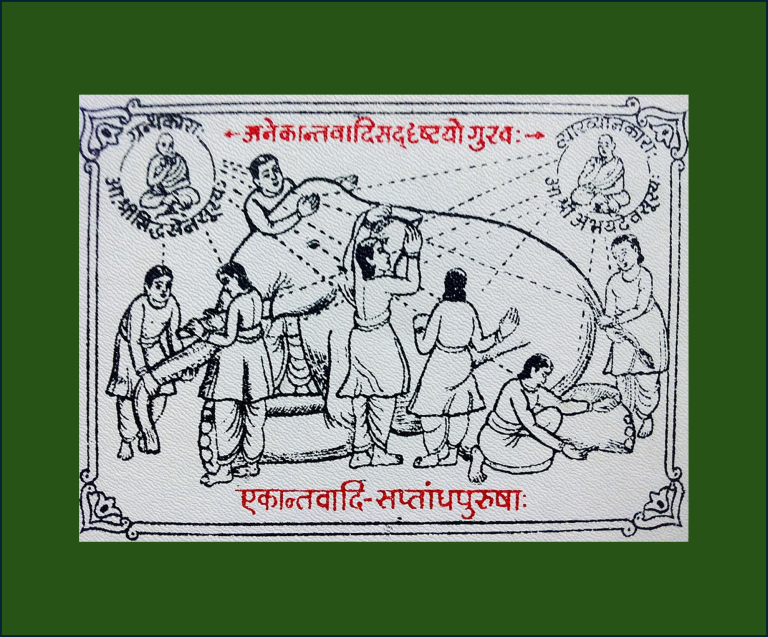
Figure 5.3. "The medieval era Jain texts explain the concepts of "many-sidedness") and "conditioned viewpoints" with the parable of the blind men and an elephant, which addresses the manifold nature of truth. This parable is found in the most ancient Jain agams before 5th century BCE."
This is a cautionary tale of the hazards of over-focus, which is a common issue in science generally since as researchers we have to exhibit persistent focus to understand complex topics."