Putting the Observations into Observational Studies
Non-experimental studies are commonly referred to as "Observational Studies". It is ironic that causal methods for observational studies typically fail to consider the causal content of the observations themselves. Go the baseball park and you can observe causation all around you, from the batter causing the ball to go out of the park, to the spectator raising their hand to cause a vendor to bring them a hotdog.
In multi-evidence causal investigations, we should first closely observe the structures involved. The properties of structures are not captured in counterfactual studies, despite their incredible importance in causal manifestations. Here I summarize a causal investigation of the factors allowing coastal wetland to maintain their elevation despite an ever increasing rise in sea level.
The Context - Rising Seas Threaten Coastal Zones
Rising sea levels threaten coastal areas around the world. It is known that coastal wetlands are able to maintain their elevations in the presence of rising water levels and subsiding land processes up to some maximum rate. There has been sustained interest in this process with a desire to predict when rates of sea-level rise will exceed ecological tolerances. Scientists understand this process to involve a number of linked causal processes, which has now been explicitly documented.
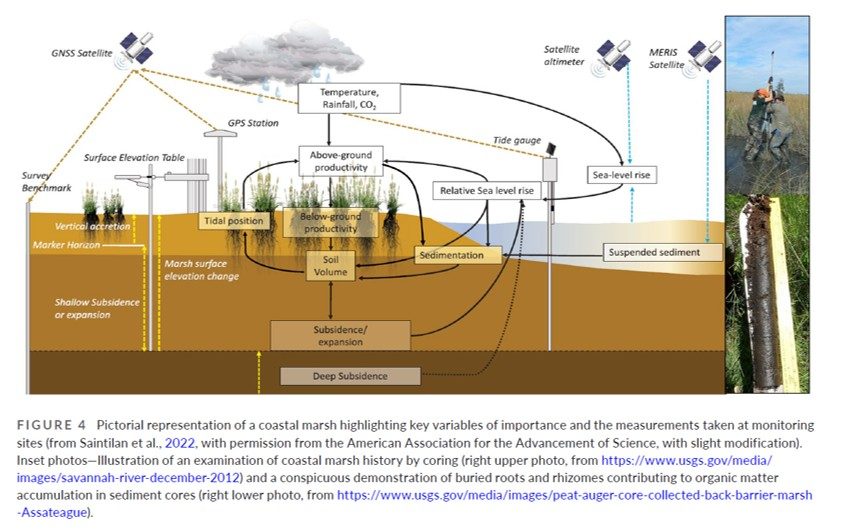
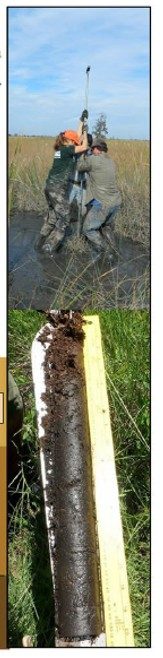
Figure 10.1. A (left). Scientists have known plants have a causal effect on the persistence of coastal wetlands since taking vertical core samples over 100 years ago. One can directly observe partially decomposed marsh roots and rhizomes in cores, interspersed with sediment deposits. Such direct evidence of mechanistic causation are common in the natural sciences.
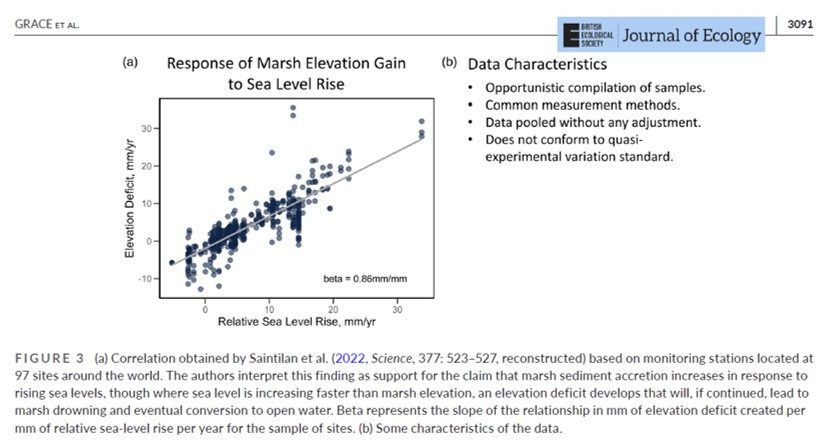
B. (above) Elevation monitoring stations are located at 97 stations around the world. Direct observations of a large number of variables were made over several years as part of a global causal investigation.
C. (below) At todays rates of sea-level rise, marshes are increasing falling behind and will be inundated soon. The line represents a summary of the sample, not a statistical model fit.
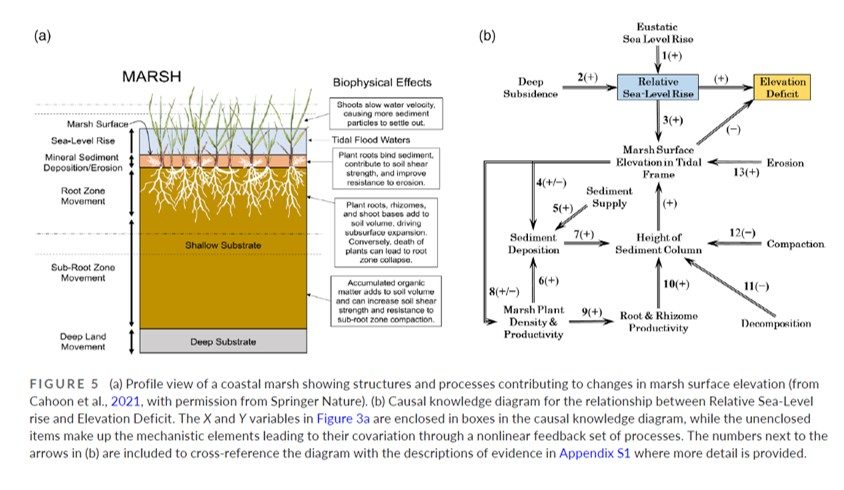
Identifying and Characterizing a Network of Causal Processes through Direct Observation and Knowledge of Physics, Biology, and Chemistry
Figure 10.2. (left) Depiction of structures and processes controlling wetland surface elevation change. (right) causal knowledge diagram depicting documented causal process.